
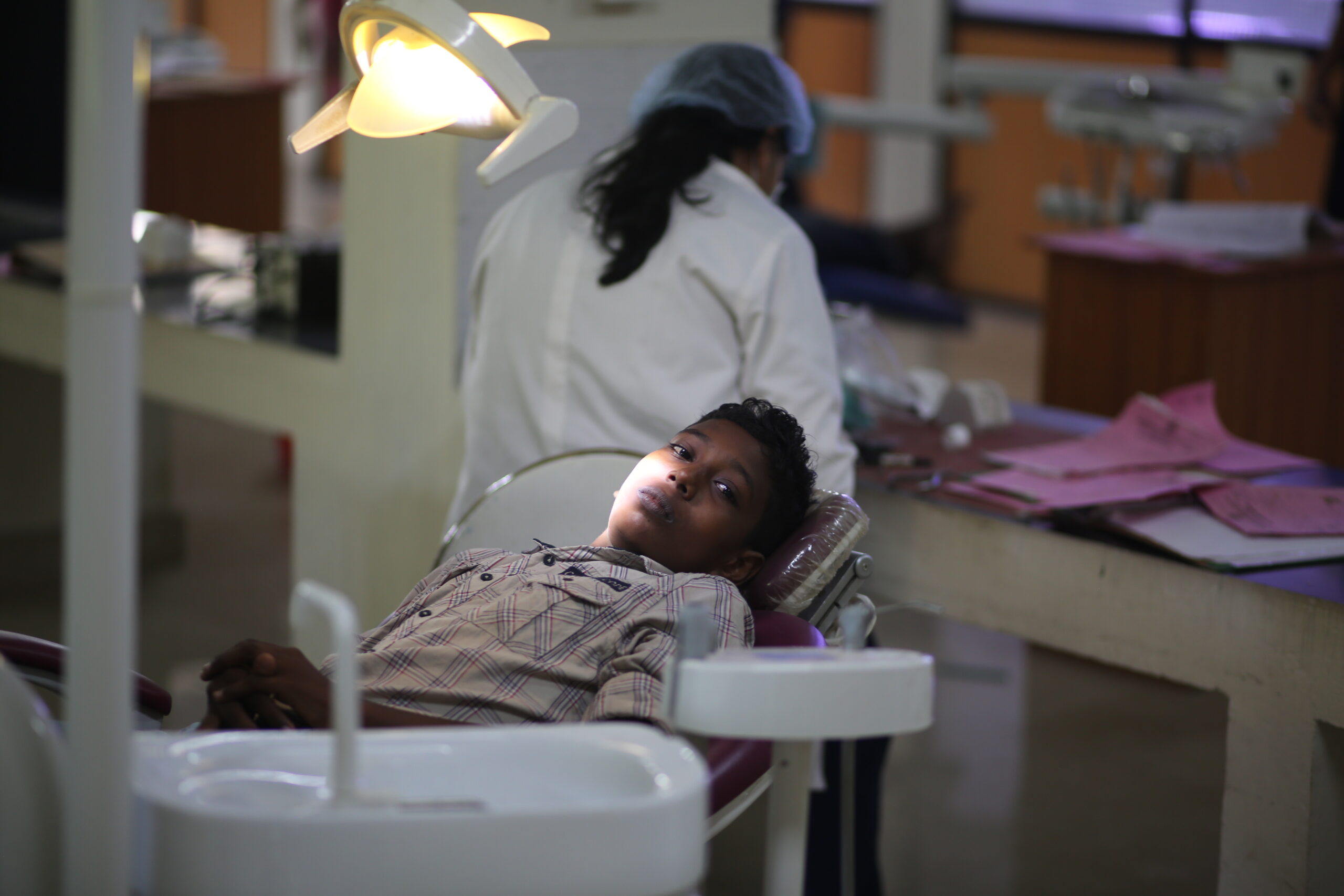
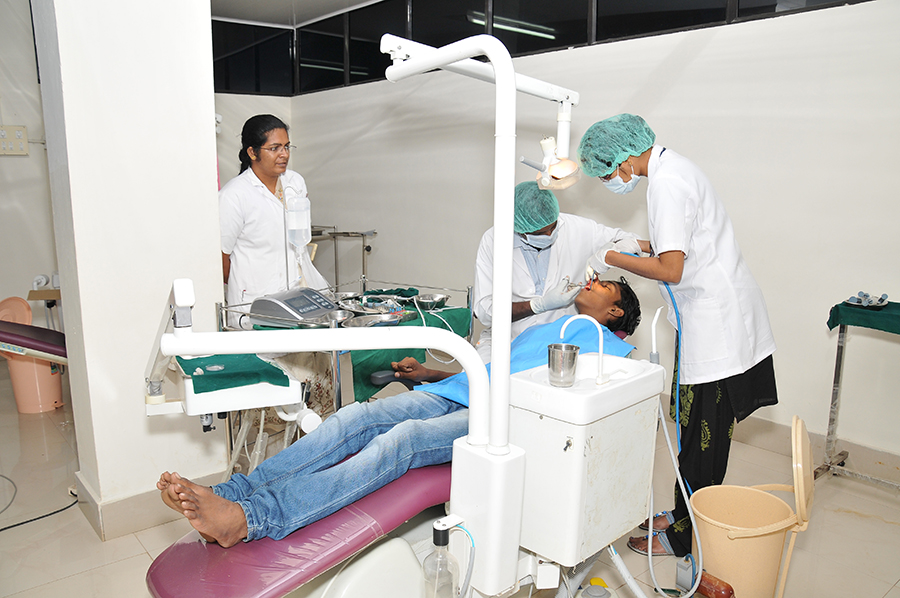
The Department is primarily involved in training the students in simple and complicated exodontia. (Extraction of teeth).In addition the department is functional in imparting such service as :
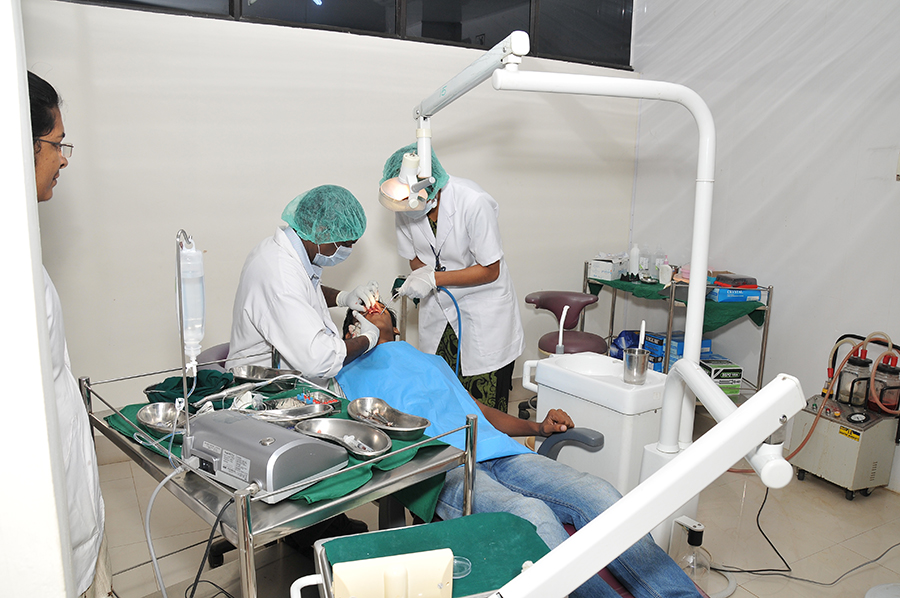
Oral and maxillofacial surgery (OMS) is a specialized dentistry branch dealing with the intricate world of the mouth, jaws, face, and neck. OMS surgeons are highly trained professionals who tackle a broad spectrum of issues, from impacted wisdom teeth and facial trauma repair to cleft lip and palate reconstruction and even sleep apnea surgery. Their expertise lies in performing complex procedures with precision, utilizing techniques like bone grafting, facial reconstruction, and jaw surgery. Often collaborating with other specialists, oral and maxillofacial surgeons play a vital role in restoring function and aesthetics of the face and jaws, ultimately improving patients' quality of life by treating conditions that impact daily activities like breathing, speaking, and eating.
A career in Oral and Maxillofacial Surgery (OMS) is an intellectually stimulating and impactful journey. The high demand for skilled OMS surgeons translates to job security and strong earning potential. You'll refine your skills in intricate surgical procedures, constantly challenged and rewarded by restoring both function and aesthetics for your patients. This specialty offers diverse practice options – private practice, hospitals, or even facial cosmetic surgery – allowing you to tailor your path. As a leader in the field, you can influence best practices, contribute to advancements, and inspire future generations. But the most fulfilling aspect might be the direct impact on your patients' lives. Whether restoring function after trauma, correcting jaw deformities, or treating sleep apnea, you'll empower them to breathe, speak, eat, and live with renewed confidence. OMS allows you to become a master surgeon, transforming lives and improving patient well-being.
Vision:
To lead in delivering safe, evidence-based surgical care and transform lives through
innovation in maxillofacial surgery.
Mission:
Provide patient-centered surgical care with the highest safety standards.
Train graduates and postgraduates with surgical excellence.
Advance research in trauma, pathology, and reconstructive techniques.
Core Values:
Excellence • Courage • Empathy • Teamwork • Ethics
On completion of the undergraduate training programme the graduate should:
➢ Be able to apply the knowledge gained in the basic medical and clinical subjects in
the management of patients with surgical problems.
➢ Be able to diagnose, manage and treat patients with basic oral surgical problem
➢ Have a broad knowledge of maxillofacial surgery and oral Implantology.
➢ Be familiar with legal, ethical and moral issues pertaining to patient care and
communication skills.
➢ Have acquired the skill to examine any patient with an oral surgical problem in an
orderly manner.
➢ Understand and practice the basic principles of asepsis and sterilization.
➢ Be competent in the extraction of the teeth under local anesthesia.
➢ Be Competent to carry out certain minor oral surgical procedures under Local
Anesthesia like trans-alveolar extraction, frenectomy, Dentoalveolar procedures,
simple impaction, biopsy, etc.
➢ Be Competent to assess, prevent and manage common complications that arise during
and after minor oral surgery.
➢ Able to provide primary care and manage medical emergencies in the dental office.
➢ Be familiar with the management of major oral surgical problems and principles
involved in the in-patient management.
Knowledge and understanding basic concepts of sterilization and asepsis and its clinical
implications; pathophysiology, management and prevention of medical emergencies;
neurophysiology, pharmacology,applied anatomy, armamentarium, techniques and
complications of local anesthesia, conscious sedation and general anesthesia.
2. Knowledge and understanding of principles and techniques of extractions and transalveolar
extractions, pathophysiology and management of odontogenic infections, maxillofacial
space infections , pathophysiology of maxillary sinus diseases and management, basics of
dental implantology, basics of preprosthetic surgery, biopsy techniques
3. Understanding clinical features, radiological diagnosis and management of maxillofacial
trauma; Understanding treatment planning and procedures performe dinorthognathic
surgery; diagnosis and management of Temporomandibular Disorders
4. Understanding and describing the theories, classification and management of cleft lip,
alveolus and palate, clinical featuresandmanagement of cystsof jaws, benign
tumors,salivarygland
pathologies,precancerousconditionsandlesions,Oralcancer,neurologicaldisordersandhead
andneckpain
5. Shouldbecompetent inoral andmaxillofacial surgerycasehistory taking, interpretation of
radiographsandotherinvestigations,diagnosingandformulatingappropriatetreatmentplan.
6. Should be competent in identification of basic surgical armamentarium, performsuturing,
incision,flapelevation, localanesthesia,basicdentalwiringtechniques.
7. Consolidateallabove-
mentionedmajorcompetenciesacquiredduringthecourseandintegratenewerevidencebasedknowl
edge indisplayingexpertiseinthescienceofOralandMaxillofacialSurgery
8.Abilitytocriticallyappraisetheirownperformanceacrossmultipleformativeassessmentscomplet
edduringthecourse.
Sri Sankara
Typically replies within an hour
Can I know more about the courses?
WhatsApp Us
🟢 Online | Privacy policy
WhatsApp us